

Last night I was watching this video from Vayner Media front man Gary Vaynerchuck and it really hit home with me and seemed like a no brainer for brands to be looking to expand their reach.
The thought of adding a call to action after a commercial – to a micro-site, Facebook page, Twitter page, YouTube channel, etc. seems too easy. Sharing the commercials on video sharing sites would seem to make sense too, but oftentimes is not the case. Folks seem reluctant to change because they have a system that works. For every auto company that is embracing this, there are two McDonalds or Stop & Shop’s that are ignoring the free call out. Chances are, unless you are on the Home Shopping Network or hawking a ShamWOW, your product isn’t being sold on the boob tube.
While Gary focuses on commercials in his videos, I would also suggest that companies are missing the boat with their offline and radio ads as well. Radio has the same limitations as TV in selling products, but you could gauge the reach on top of the metrics the stations offer by offering a specific Facebook 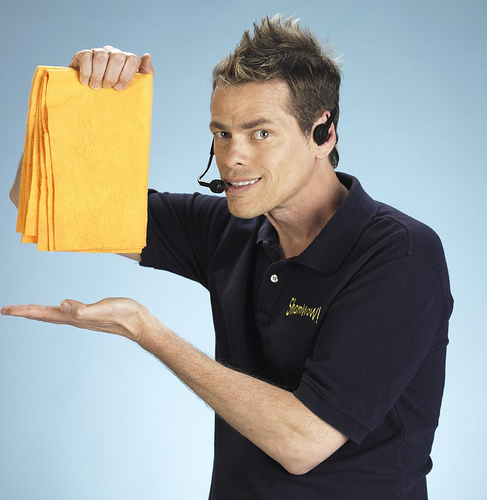 page with a survey that asks where they heard the commercial along with some interesting content. You could also add the URL to magazine and other print ads because it puts something tangible and actionable on an ad that won’t immediately garner a sale on the john. By adding a link you could also get someone heading to the site if they happen to have a BlackBerry or iPhone handy in their *ahem* office. What could it hurt? A tiny URL or Facebook call out in the corner of the ad won’t hurt anyone, but will add some more bang to your buck and some additional metrics to track.
Before tossing this to ya’ll to see what you think about the proposition, I wanted to share an oddity that I got from a few of the folks I spoke with during the #soxup for the book release party of Steve Garfield’s Get Seen (my review). Now the event was about using video to get seen, so it took me by surprise talking to some folks only to find out that they were terrified of getting in front of the camera or opening their company up to user generated video. I wonder if that has anything to do with the hesitancy of adding new media to traditional media pieces. What do you think?


I agree with you as well as Gary, (which i nearly always do… other than football) about this… and think his messaging of ALL commercials is right, surely he meant radio as well.
I remember seeing a story about a year ago talking about the death of the Fax (pointing to delivery trucks no longer including fax numbers on the side but only website and telephone #)… that shift came much too late. To Gary's point everything is happening SO fast in SM that you have to adapt quickly. Moving eyeballs from TV (or ears from Radio) online is more imperative than ever… and you are def doing a disservice to the brand if you do not transition.
To me one of the keys of SM eyeballs, is just as Gary says: DATA! Why pay a consulting firm, or a research arm if you can literally ask the community and look inward!? you must, if not, you will fail.
Great post as always, thanks for getting the grey matter moving this morning!
AA
Glad to help Alex. I have been noticing it more and more and I can't figure out why. By the time most catch on, might be too late.